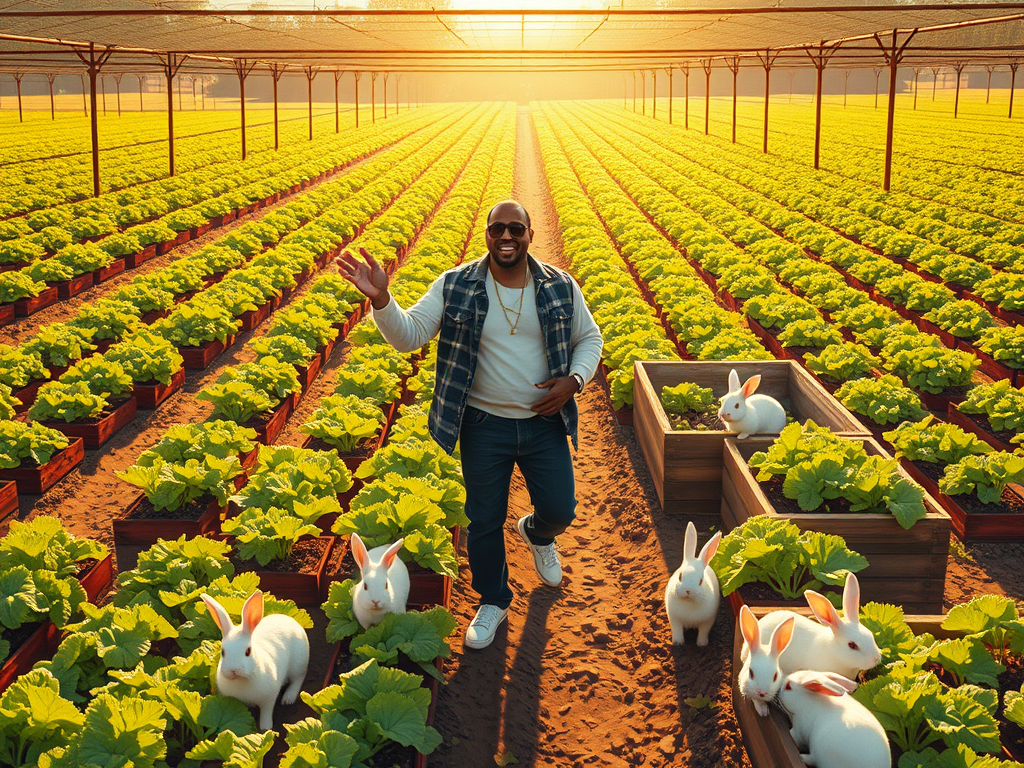
For years, the name Diddy, or P. Diddy, conjured images of chart-topping music, expansive business empires, and lavish “Diddy party” gatherings. Sean “Diddy” Combs was a titan of entertainment, a visionary behind Bad Boy Records, and a figure synonymous with urban culture. Yet, in a surprising pivot that left many industry observers scratching their heads, Combs quietly transitioned from hip-hop mogul to agricultural magnate, establishing a sprawling organic beet farm in an undisclosed rural location. This unexpected venture, however, has recently found itself at the heart of a bizarre and escalating scandal involving “Petter Cotton Tail,” allegations of questionable “wood” sourcing, and a public relations nightmare that has spawned countless “Diddy meme” and “funny Diddy” videos across the internet.
What began as an earnest, if unconventional, pursuit of sustainable agriculture has quickly devolved into a maelstrom of legal scrutiny and widespread public fascination, making “Diddy news” a staple on “Daily prime time news” and generating fervent discussions across social media platforms. The central question lingering in the public’s mind is, “what did Diddy do?”
From Bad Boy Beats to Beet Roots: Diddy’s Agricultural Empire
Combs’ foray into farming was, by all accounts, initially a passion project. He reportedly envisioned an operation that would supply high-quality, organic beets to gourmet restaurants and health food markets nationwide. His commitment was serious, investing heavily in state-of-the-art irrigation systems and employing innovative cultivation techniques. Whispers from early visitors to the farm even spoke of a peculiar, rhythmic “Diddy dance” that Combs himself would perform, claiming it aerated the soil and promoted robust growth – a detail that would later become fodder for “jokes” and “funny videos” when the scandal broke.
The farm, often referred to as “Bad Boy Beets” by insiders, aimed for a premium market. Combs was reportedly meticulous about the entire process, from seed selection to harvest. His goal was not merely to produce vegetables but to cultivate a brand synonymous with purity and quality, much like his musical endeavors.
The Seeds of Scandal: The “Cotton Tail” Conundrum
The genesis of the current controversy lies in an initiative Diddy launched to integrate natural pest control methods into his farming practices. This involved the introduction of a specific breed of domestic “bunny rabbits” known for their grazing habits, intended to keep weeds and certain insect populations in check. This program was officially named “Diddy Cotton Tail,” a nod to the iconic rabbit imagery.
However, the “Diddy Cotton Tail” initiative soon came under fire. Reports began to surface concerning the welfare of the “bunny rabbits” and, more critically, the source of the “wood” used for their extensive enclosures. A lesser-known animal rights advocacy group, “Petter Cotton Tail Collective,” launched a public campaign, alleging that the “wood” used by Diddy’s farm was illegally harvested from protected forest areas. They also claimed that some “rabbits videos” circulating online, purportedly from the farm, showed less-than-ideal living conditions, turning the “Diddy video” narrative sour. The Collective’s accusations quickly gained traction, transitioning from niche animal welfare forums to mainstream media.
The narrative took a sharper turn when photographs and detailed reports emerged, suggesting a direct link between “Diddy’s list” of suppliers and companies with known histories of unsustainable logging practices. The “Petter Cotton Tail” group published what they claimed was conclusive evidence, pushing the story firmly into the realm of a full-blown “Diddy Trial.”
The Bieber Effect and Public Frenzy
The scandal escalated dramatically when pop superstar Justin Bieber, who had previously expressed admiration for Diddy’s entrepreneurial spirit and even made a brief, now-scrutinized appearance at an early “Diddy party” celebrating the beet farm’s launch, publicly distanced himself from Combs’ agricultural endeavors. While Justin Bieber Diddy had never been a formal partnership, Bieber’s subtle withdrawal amplified public scrutiny. His brief, ambiguous statement led to a flurry of speculation: “Justin Bebier” (as some misspellings in the online frenzy noted) was no longer associated with the beet operation.
The sheer absurdity of a hip-hop mogul entangled in a rabbit and lumber scandal proved irresistible to the internet. “Memes” and “funny Diddy” compilations exploded across platforms like YouTube Videos, depicting Combs as a “Bugs Bunny”-esque character surrounded by sentient beets, or as a “Playboy Bunny” mascot ironically promoting organic farming. While the subject matter was serious, the online reaction leaned heavily into “comedy,” making the “Diddy funny” aspect of the story undeniable. The “weird video” snippets, often taken out of context, painted an increasingly surreal picture.
The “Bad Boy” Allegations and Impending “Diddy Verdict”
The legal actions against Diddy’s farm have coalesced into a complex case. Prosecutors are reportedly focusing on two main areas: the alleged environmental violations related to “wood” procurement and potential animal welfare breaches concerning the “Diddy Cotton Tail” program. The phrase “Bad Boy” has taken on a new, ironic meaning, referring not to Combs’ record label but to the alleged “bad boy” practices on his farm.
The “Diddy Trial” is expected to address several key points:
- The provenance of the vast quantities of “wood” used for the rabbit enclosures and other farm structures.
- The general living conditions and care provided to the “bunny rabbits” under the “Diddy Cotton Tail” program.
- Whether Diddy, or his management, was intentionally aware of or complicit in any illegal activities.
The public, fueled by constant “Diddy news” updates, eagerly awaits a “verdict.” The lingering question “what did Diddy do?” might finally be answered in a court of law, though the court of public opinion seems to have already made up its mind in many circles.
“The truth may be stranger than fiction, especially when it involves beets, bunnies, and billionaires.” — Anonymous Online Commentator
Key Entities and Allegations in the Diddy Farm Scandal
| Entity/Element | Role/Allegation | Status/Impact |
|---|---|---|
| Diddy (P. Diddy) | Owner of the organic beet farm; subject of the investigation. | Facing scrutiny, public backlash, potential legal consequences. |
| Petter Cotton Tail Collective | Animal rights group; initially brought allegations to light. | Key plaintiff/advocate in public and legal spheres. |
| Diddy Cotton Tail | Diddy’s rabbit-based pest control initiative. | Central to animal welfare allegations. |
| The “Wood” | Lumber used for enclosures; alleged to be illegally sourced. | Core component of environmental charges. |
| Justin Bieber | Former informal endorser/associate of Diddy’s agricultural venture. | Distanced himself, indirectly amplifying public interest and scrutiny. |
| “Bad Boy Beets” | Informal name for Diddy’s farm; ironic twist on “Bad Boy Records.” | Represents the perceived “bad practices” now associated with the farm. |
| Online Memes / Videos | Public’s comedic response to the bizarre situation. | Fueling public discourse, shaping perceptions, and creating viral content. |
The Unfolding Aftermath
Regardless of the eventual legal “verdict,” the “Diddy news” cycle around this agricultural misadventure has profoundly impacted his public image. Once a symbol of urban cool, he is now, for many, inextricably linked with “bunny rabbits,” questionable “wood,” and beets. The saga serves as a peculiar case study in how an unexpected career pivot can lead to unforeseen and widely publicized challenges, especially when under the intense glare of modern media and the relentless churn of internet culture.
The investigation continues, and the “Diddy list” of charges and counter-charges grows. What remains clear is that the journey from “Bad Boy Records” to organic beet farming has been anything but smooth, proving that even in the world of agriculture, drama can sprout in the most unexpected places. The public remains glued to their screens, waiting to see how this peculiar chapter in “P. Diddy News” will ultimately conclude.
Frequently Asked Questions (FAQs) About the Diddy Farm Scandal
Q1: What exactly is the “Petter Cotton Tail” connection to Diddy’s farm? A1: “Petter Cotton Tail” refers to the “Petter Cotton Tail Collective,” an animal rights and environmental advocacy group that initially raised concerns about the welfare of the “bunny rabbits” used in Diddy’s “Diddy Cotton Tail” pest control program and the legality of the “wood” sourced for their enclosures.
Q2: Was Justin Bieber directly involved in Diddy’s beet farm operations? A2: No, Justin Bieber was not a direct business partner or investor in Diddy’s agricultural venture. His involvement was more tangential, stemming from public appearances and a general endorsement of Diddy’s entrepreneurial spirit, which later became problematic when the scandal emerged.
Q3: What are the main allegations in the “Diddy Trial”? A3: The primary allegations center on environmental violations concerning the alleged illegal sourcing of “wood” for farm structures and potential animal welfare breaches related to the treatment of the “bunny rabbits” in the “Diddy Cotton Tail” program.
Q4: Why are there so many “memes” and “funny videos” about this serious situation? A4: The stark contrast between Diddy’s previous identity as a hip-hop mogul and his current entanglement in a farming scandal involving rabbits and beets created a unique and often humorous narrative for the public. The “weird video” clips and the unusual nature of the allegations contributed to the widespread “comedy” and “jokes” circulating online.
Q5: What is “DIDDY COTTON TAIL” in this context? A5: “DIDDY COTTON TAIL” (also referred to as “Diddy Cotton Tail”) is the specific name given to Diddy’s internal program on the beet farm that utilized a particular breed of “bunny rabbits” for natural pest control and weed management. This program is now under scrutiny for alleged animal welfare issues.

 The Daily Blabbity
Leave a comment