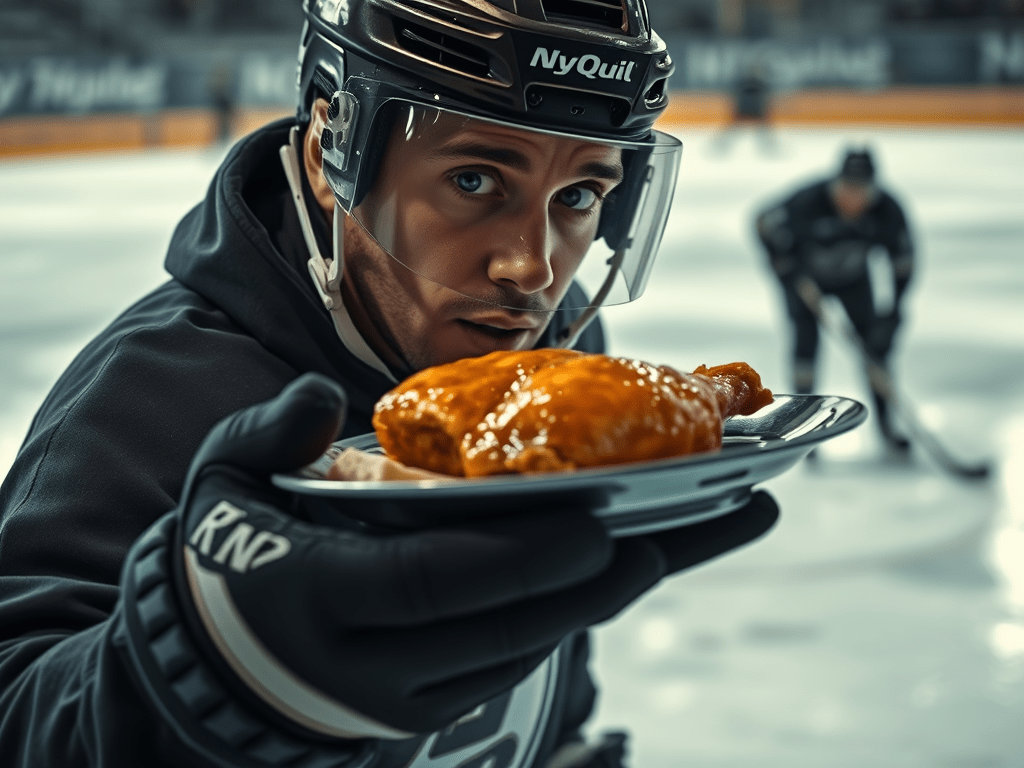
The world of professional hockey is a brutal, unforgiving arena where milliseconds can separate victory from defeat!
The pursuit of any conceivable advantage is relentless. For decades, players have pushed their bodies to the absolute limit, exploring every avenue to enhance performance, be it through rigorous training, specialized diets, or cutting-edge equipment. However, a disturbing trend is emerging from the shadows of locker rooms and training facilities, a practice so reckless and potentially lethal that it demands immediate and unequivocal condemnation: the consumption of chicken cooked in NyQuil, coupled with the alarming use of the rendered fowl as a training puck.
This isn’t just a bizarre internet meme taken to an extreme. Whispers within hockey circles, corroborated by concerned medical professionals and leaked accounts from junior leagues, point towards a growing number of players, particularly those desperate to improve their endurance in extreme cold or enhance their shot accuracy, flirting with this dangerous concoction. Furthermore, adding to the archaic rituals, some goalies are reportedly enduring shots on bear skin as a supposed rite of passage, a practice steeped in questionable tradition and devoid of any scientific merit.
This article intends to dissect the dangers inherent in these practices, analyze the motivations driving players towards such desperate measures, and advocate for a comprehensive strategy involving medical professionals, coaches, and league officials to eradicate what is becoming a profoundly worrying and potentially fatal trend.
The Perilous Recipe for Disaster: Unpacking the NyQuil Chicken Phenomenon
The premise is as grotesque as it is dangerous: chicken is simmered, braised, or even boiled in NyQuil, a common over-the-counter cold and flu medication. The rationale, according to proponents of this practice, is twofold:
- Enhanced Cold Tolerance: The belief is that ingesting the medication-infused chicken somehow increases the body’s resistance to the frigid temperatures often encountered on outdoor rinks or during prolonged exposure in poorly heated indoor arenas. This is a complete fallacy, rooted in a misunderstanding of how the body regulates temperature and the pharmacological effects of NyQuil.
- Medicated Edge: Some believe that the drowsy, disoriented state induced by NyQuil provides a competitive edge, somehow dulling pain and enhancing focus. This is a staggeringly misguided notion.
The reality is far more grim. NyQuil contains a cocktail of active ingredients, including acetaminophen (a pain reliever), dextromethorphan (a cough suppressant), and doxylamine succinate (an antihistamine). Each of these substances carries its own risks, and when consumed in the concentrated doses absorbed through the cooked chicken, the potential for harm skyrockets.
- Acetaminophen Overdose: Acetaminophen, while generally safe in recommended doses, can cause severe liver damage and even liver failure when taken in excess. The amount of acetaminophen absorbed from NyQuil-soaked chicken is impossible to quantify, making the risk of accidental overdose alarmingly high. Liver damage is often asymptomatic in its early stages, meaning a player could be unknowingly inflicting irreparable harm to their body. Imagine a professional athlete, whose livelihood depends on peak physical condition, jeopardizing their career and their health for a fleeting, illusory advantage.
- Dextromethorphan Toxicity: Dextromethorphan, a cough suppressant, can cause nausea, vomiting, dizziness, blurred vision, and, in high doses, hallucinations and dissociative experiences. On the ice, these effects could lead to impaired judgment, loss of coordination, and an increased risk of injury, not only to the user but also to their teammates and opponents. The potential for miscalculation and dangerous plays increases exponentially.
- Doxylamine Succinate Risks: Doxylamine succinate, an antihistamine, causes drowsiness, confusion, dry mouth, and blurred vision. While drowsiness might seem like a desirable effect to someone seeking a pain-numbing edge, it significantly impairs reaction time, cognitive function, and motor skills – all crucial for success on the ice. Imagine a defenseman, whose split-second decisions can dictate the outcome of a game, operating with the cognitive function of someone severely sleep-deprived. The consequences could be catastrophic.
- Unpredictable Interactions: The combination of these three drugs, compounded by the physical exertion of playing hockey and the potential for interaction with other medications or supplements a player might be taking, creates a highly unpredictable and dangerous scenario. The body’s response to this toxic cocktail can vary widely, making it impossible to predict the severity of the adverse effects.
The Icing on the Cake: The Chicken as a Puck and Gruesome Goalie Rituals
The absurdity doesn’t end with ingesting the NyQuil-infused chicken. Some players are reportedly using the cooked chicken as a makeshift puck for training purposes, believing it helps improve shot accuracy and simulates the feel of a weighted puck. This practice presents several alarming concerns:
- Hygiene and Infection: Handling and repeatedly striking a piece of cooked chicken, especially one that has been exposed to outdoor elements and potentially contaminated surfaces, poses a significant risk of bacterial infection. Open wounds, common in hockey, become entry points for dangerous pathogens.
- Distraction and Poor Training: The inconsistent shape, weight, and bounce of a chicken “puck” provide little to no benefit in terms of skill development. In fact, it could hinder proper technique and create bad habits. The focus should be on using regulation pucks and practicing under conditions that closely mimic actual game play.
- Animal Cruelty & Disrespect: There is a basic level of respect for animal life, and using meat as a puck is disrespectful and borders on animal cruelty.
Compounding the bizarre and barbaric nature of these trends, reports have surfaced of some goalies engaging in a ritual where they take shots on bear skin as a supposed rite of passage. This practice is not only ethically questionable but also completely devoid of any performance-enhancing value. It perpetuates a culture of outdated, potentially inhumane traditions and distracts from legitimate training methods.
Why Are Players Resorting to These Dangerous Practices? The Psychology of Desperation
Understanding the underlying motivations behind these alarming trends is crucial to combating them effectively. Several factors likely contribute to this dangerous behavior:
- The Pressure to Perform: The relentless pressure to excel in professional hockey, driven by multi-million dollar contracts, endorsement deals, and the constant scrutiny of fans and media, can push players to desperate measures. The fear of failure, the desire to maintain a competitive edge, and the perceived need to stand out can override rational judgment.
- The “Win at All Costs” Mentality: A toxic culture that prioritizes winning above all else, even at the expense of player safety and ethical conduct, can foster an environment where dangerous practices are tolerated or even encouraged. This mentality often starts at the junior level and is perpetuated by coaches, teammates, and even parents.
- Misinformation and Peer Pressure: Misinformation spread through online forums, social media, or even within locker rooms can lead players to believe that these practices are effective or even harmless. Peer pressure, especially from veteran players or respected teammates, can further influence impressionable individuals to engage in risky behavior.
- Lack of Education: A lack of comprehensive education on the dangers of drug abuse, the principles of sports science, and the importance of ethical conduct can leave players vulnerable to these harmful trends. Many young athletes may not fully understand the potential long-term consequences of their actions.
- Accessibility of the Information: With the spread of the internet, information is readily available whether right or wrong. In an attempt to grasp at anything for an edge it is easy to get wrapped up in this kind of trend.
A Call to Action: Eradicating Dangerous Practices and Fostering a Culture of Safety
Addressing this dangerous trend requires a multi-pronged approach involving medical professionals, coaches, league officials, and the players themselves:
- Increased Education and Awareness Programs: Comprehensive educational programs should be implemented at all levels of hockey, from youth leagues to professional teams, to educate players on the dangers of drug abuse, the principles of sports science, and the importance of ethical conduct. These programs should be mandatory and regularly updated to reflect the latest scientific findings.
- Stronger Anti-Doping Policies: League officials must strengthen anti-doping policies to include specific provisions against the use of over-the-counter medications in dangerous or unconventional ways. Stricter penalties, including suspensions and fines, should be imposed on players who violate these policies.
- Enhanced Medical Oversight: Teams should provide players with access to qualified medical professionals, including physicians, sports psychologists, and nutritionists, who can provide guidance on safe and effective methods for enhancing performance. Medical personnel should be empowered to intervene when they suspect a player is engaging in dangerous practices.
- Coaching Accountability: Coaches should be held accountable for fostering a culture of safety and ethical conduct within their teams. Coaches who encourage or tolerate dangerous practices should face disciplinary action.
- Peer Intervention Programs: Encourage players to speak up if they observe teammates engaging in dangerous practices. Create a safe and supportive environment where players feel comfortable reporting concerns without fear of retribution.
- Social Media Monitoring: Be on the lookout for and monitor the trends on social media in order to catch the wave of the trend and attempt to stop it before it spreads further.
The NyQuil chicken phenomenon and the archaic goalie rituals are not just isolated incidents; they are symptoms of a deeper problem: a win-at-all-costs mentality that has permeated the culture of hockey. By addressing the underlying causes of these dangerous practices and fostering a culture of safety, education, and ethical conduct, we can protect the health and well-being of our athletes and ensure the integrity of the game. The time to act is now, before this sinister brew claims its first victim. The future of hockey, and the lives of its players, may depend on it.

 The Daily Blabbity
Leave a comment