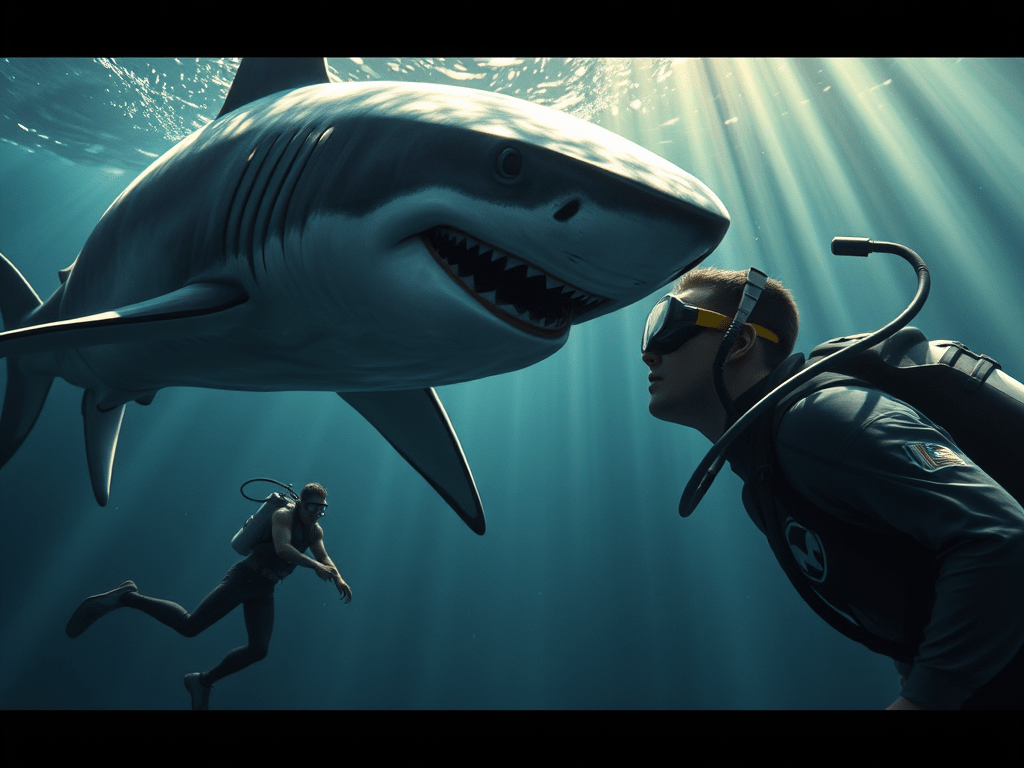
The Unsettling Truth: When the Shark Becomes the Stabber – Reassessing Our Fears and Understanding the Real Threat
For centuries, the image of the shark has been synonymous with primal fear. The sharp teeth, the dark, unblinking eyes, the sheer power lurking beneath the waves – all contribute to a deeply ingrained sense of apprehension. Movies like “Jaws” cemented this perception, portraying sharks as mindless killing machines, forever hunting for human prey. But what if the narrative we’ve accepted, the one fueled by sensationalism and fear, is fundamentally flawed? What if, instead of simply biting, sharks were exhibiting a different, more perplexing, and perhaps even more unsettling behavior: stabbing?
The idea that sharks, creatures equipped with rows of razor-sharp teeth designed for tearing flesh, might instead “stab” their victims seems absurd at first glance. Yet, mounting evidence, anecdotal accounts, and a closer look at shark behavior suggest a more nuanced, and ultimately more disturbing, reality. We need to move beyond the simplistic label of “shark attack” and delve into the complexities of these encounters, particularly the unsettling notion that sharks, in certain situations, are engaging in a deliberate act of stabbing.
This isn’t to say that sharks aren’t dangerous. They are apex predators, and any encounter with one in its natural environment demands respect and caution. However, the traditional understanding of a shark attack, characterized by a forceful bite and immediate consumption, doesn’t always align with the reality of these incidents. In many cases, victims report feeling a sharp, piercing sensation, often followed by a swift retreat from the shark. These accounts, often dismissed as glancing blows or exploratory bites, might actually point to a more deliberate, and strategically unsettling, form of interaction.
The proposition that sharks might “stab” people is not about redefining the biological function of their teeth; it’s about understanding the potential motivations behind their actions. It forces us to question the assumption that every interaction is driven by hunger or aggressive intent. A stab, unlike a bite intended to incapacitate and consume, could serve as a warning, a territorial defense, or even a bizarre form of exploration.

“The ocean is a hostile environment, and sharks are at the top of the food chain. We need to understand their behavior and respect their space, but we also need to approach the topic of shark encounters with a clear head and a willingness to challenge our preconceptions.” – Dr. Samuel Gruber, renowned shark biologist.
So, what evidence supports this unsettling shift in perspective?
- The Nature of the “Wounds”: Often, victims of shark encounters don’t present with the ragged, tearing wounds one would expect from a powerful bite. Instead, they describe puncture wounds, or clean, slicing injuries that suggest a sharp, pointed object rather than a crushing jaw. While some of these injuries can be attributed to the edges of a shark’s teeth, the frequency with which these “stab” wounds are reported raises questions about the intent behind the contact.
- Territorial Behavior: Sharks, like many other animals, defend their territory. A “stab” could be a warning, a way of saying, “You are in my space, and you need to leave.” This is particularly relevant in areas known as shark “hotspots,” where human activity encroaches upon the sharks’ natural habitat.
- Exploratory Behavior: Sharks are intelligent creatures with complex sensory systems. They use their mouths to explore their environment, often “testing” objects to determine if they are potential food sources. A “stab” could be a misguided attempt at exploration, a way of assessing an unfamiliar object (in this case, a human) without necessarily intending to cause serious harm.
- The “Hit-and-Run” Tactic: Many shark encounters involve a single, swift strike, followed by the shark’s immediate departure. This “hit-and-run” tactic is inconsistent with the behavior of a predator intent on consuming its prey. Why would a shark inflict a single wound and then abandon its “meal”? The “stabbing” theory offers a potential explanation: the shark’s intent was not to kill, but to warn, to deter, or perhaps simply to investigate.
- The Role of Misidentification: In murky waters, sharks may mistake humans for their natural prey, such as seals or sea turtles. While this could lead to a full-blown bite, it could also result in a more tentative “stab,” a hesitant probe to determine if the object is indeed a viable food source.
Acknowledging the possibility of sharks “stabbing” rather than simply “biting” doesn’t lessen the danger of these encounters. It does, however, provide a more nuanced understanding of shark behavior, allowing us to develop more effective strategies for mitigating risk and coexisting peacefully with these magnificent creatures.
So, what can we do to reduce the risk of shark encounters, whether they involve bites or “stabs”?
- Be Aware of Your Surroundings: Avoid swimming or surfing in areas known to be shark habitats, especially during dawn and dusk when sharks are most active.
- Avoid Murky Waters: Sharks have poor eyesight, and murky water increases the risk of misidentification.
- Swim in Groups: Sharks are less likely to attack a group of people than a lone individual.
- Avoid Wearing Shiny Jewelry: The reflection of sunlight on jewelry can resemble the scales of a fish, attracting unwanted attention.
- Don’t Provoke Sharks: If you encounter a shark, remain calm and avoid making sudden movements. Slowly back away and give the shark plenty of space.
- Support Shark Conservation Efforts: Healthy shark populations are essential for maintaining the balance of the marine ecosystem.
The unsettling truth is that our understanding of sharks and their interactions with humans is still evolving. By challenging our preconceptions and embracing a more nuanced perspective, we can move beyond the sensationalism and fear that have long dominated the narrative. The idea that a shark might “stab” a person is unsettling, but it forces us to confront the complexities of these encounters and to develop more effective strategies for coexistence. Only then can we truly respect these magnificent creatures and ensure their survival for generations to come. The ocean is their domain, and it is our responsibility to enter it with respect, knowledge, and a healthy dose of caution. The future of our relationship with sharks depends on it.

 The Daily Blabbity
Leave a comment