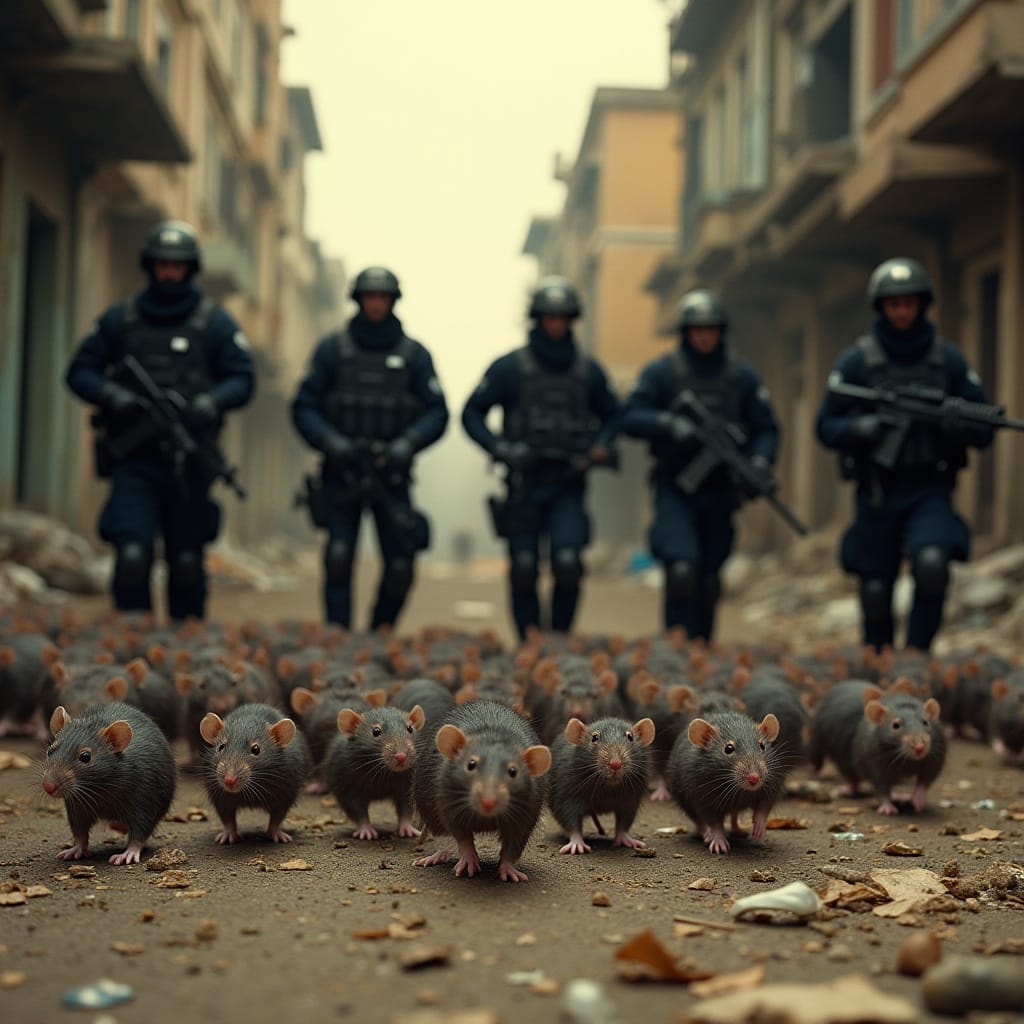
Rat Exodus: Trump Administration Declares Victory as Border Controls Extend to Rodent Realm
New York City, NY – In an unprecedented move signaling a new frontier in border security, the Trump administration is celebrating a significant drop in the city’s rat population after implementing stringent “Rodent Repatriation” policies. What began as a focus on human immigration has now extended into the animal kingdom, with officials claiming that even unwanted rodents from foreign lands are being deported back to their alleged countries of origin.
The initiative, spearheaded by the Department of Homeland Security (DHS) in collaboration with the Environmental Protection Agency (EPA), has been shrouded in secrecy, with details emerging only through leaked documents and anonymous sources within the agencies. According to these sources, the program, dubbed “Operation Squeaky Clean,” has been underway for several months, utilizing cutting-edge technology and unorthodox methods to identify and remove foreign-born rats from the city’s sprawling underground network.
The rationale behind this seemingly bizarre undertaking, according to a statement released by a White House spokesperson, is rooted in national security and economic concerns. “For too long, America’s cities have been overrun by foreign rats, taking jobs away from hardworking American rats,” the statement read. “These illegal rodents are draining our resources, spreading disease, and undermining the very fabric of our society. President Trump is committed to putting America first, and that includes ensuring that our rat population reflects the values and ideals of our nation.”
The methods employed in “Operation Squeaky Clean” are reportedly multi-faceted and involve a blend of traditional pest control techniques with advanced genetic analysis. Specially trained “Rat Interceptors” are deployed throughout the city, armed with traps, poison, and sophisticated DNA testing kits. When a rat is captured, a sample of its DNA is analyzed to determine its origin. Rats with genetic markers suggesting they originated outside the United States are then processed for deportation.
“We are using state-of-the-art technology to identify the genetic signatures of rats from different regions of the world,” explained Dr. Beatrice Chumley, a lead geneticist allegedly involved in the project. “For example, we can distinguish between a brown rat from Norway and a black rat from Southeast Asia. If a rat’s DNA indicates a foreign origin, it is tagged and prepared for removal.”
The exact mechanism of deportation remains unclear, but reports suggest that the rats are transported in specially designed containers to various ports across the country. From there, they are allegedly loaded onto cargo ships and sent to their “home countries,” based on the genetic analysis. While the logistics of this operation are staggering, administration officials insist that it is a necessary measure to protect American interests.
“We understand that some people may find this initiative unusual,” acknowledged a senior DHS official, speaking on condition of anonymity. “But we believe that every country has the right to control its borders, and that includes controlling the types of animals that reside within its borders. These foreign rats are not just pests; they are a threat to our public health and economic well-being.”

The administration’s claims have been met with widespread skepticism and ridicule from scientists, animal rights activists, and even some within the EPA. Critics argue that the program is not only impractical and expensive but also based on flawed science and xenophobic rhetoric.
“The idea that you can definitively determine a rat’s ‘country of origin’ based on its DNA is absurd,” said Dr. Emily Carter, a renowned rodentologist at Columbia University. “Rats are highly mobile creatures, and their genetic makeup is constantly evolving and intermingling. This whole thing sounds like a thinly veiled excuse for discriminatory practices.”
Animal rights groups have condemned the program as cruel and inhumane, arguing that rats are sentient beings deserving of respect and compassion. “Deporting rats is not only scientifically unsound, but it is also morally reprehensible,” said Sarah Jenkins, director of the Animal Welfare League. “These animals are being ripped from their homes and subjected to untold suffering, all in the name of political grandstanding.”
Adding to the controversy are concerns about the environmental impact of the “Rodent Repatriation” program. Experts warn that disrupting the rat population could have unintended consequences for the city’s ecosystem, potentially leading to an increase in other pests or disrupting the delicate balance of the food chain.
“Rats play a role in the urban ecosystem, even if it’s not a pleasant one,” explained Dr. David Miller, an environmental scientist at New York University. “They help to decompose organic waste and serve as a food source for other animals. Removing them on a large scale could have ripple effects that we don’t fully understand.”
Despite the criticism, the Trump administration remains steadfast in its commitment to “Operation Squeaky Clean,” touting the program as a major success. In a recent press conference, President Trump declared that the initiative had already led to a significant reduction in the city’s rat population, resulting in cleaner streets, safer neighborhoods, and a more prosperous economy.
“We are making America great again, one rat at a time,” the President proclaimed, to thunderous applause from his supporters. “These foreign rats thought they could come here and live off our hard work, but we are sending them back where they came from. We are building a rat-proof wall, and we are making the rats pay for it!”
While the President’s claims have been widely disputed by independent fact-checkers, the administration’s unwavering support for “Operation Squeaky Clean” suggests that the program is likely to continue, regardless of the scientific evidence or ethical concerns. As the rat deportation saga unfolds, it serves as a stark reminder of the increasingly blurred lines between politics, science, and animal welfare in the age of Trump. The future of New York City’s rat population – and perhaps the future of immigration policy – remains uncertain. Only time will tell whether “Operation Squeaky Clean” will be remembered as a stroke of genius or a monument to absurdity. For now, the rats of New York City are living in fear, unsure of their fate and the whims of a government determined to control every aspect of their existence.

 The Daily Blabbity
Leave a comment